COP28 is moving along, with promising speeches and leadership from a fossil fuel executive—but the news arriving from Dubai elicit a mix of hope and dread. Are we ready to move beyond pledges to meaningful action? We boast about our human ability to use complicated math to explain our surroundings. We can do life-saving surgery and fly rockets— and we can also accurately project our self-inflicted doom. Many incredible graphs are out there depicting our trajectory towards an inferno-like atmosphere, exercises of science-based cristal ball that raise the alarm loud and clear. Yet, all our intelligence does not translate into common sense when it comes to our collective decisions and choices.
Why do we prefer to procrastinate while dreaming of a silver bullet, a scientific miracle of sorts, if we have known the answer for a while? Even the fact that the poor are already bearing the brunt of our past and current decisions has yet to influence meaningful change.
The way we organized our economy and society (yes, it is a choice) does not allow companies to “waste” money with meaningful changes. A turnaround in industrial processes or types of consumer products we push onto ourselves is only allowed when initiatives don’t impact profits or executives’ fiduciary duty to shareholders.
Geopolitical considerations stop governments from prioritizing the future. GDP metrics favor war over peace while us, individuals, have a hard time budging from our comfort zone and privileges. Looking at the microcosm of decision making, we see politicians thinking they need to prioritize their elections. As consumers, our individual choices are defended as rights, regardless of our impact. Managers have year-end bonuses to worry about. And the list goes on.
Meanwhile, a focus on scalable businesses as the best option for development or GDP growth is blinding us when it comes to protecting natural habitats, hindering the success of small and creative entrepreneurs. Sometimes solutions are too local to scale. Should that be a death sentence?
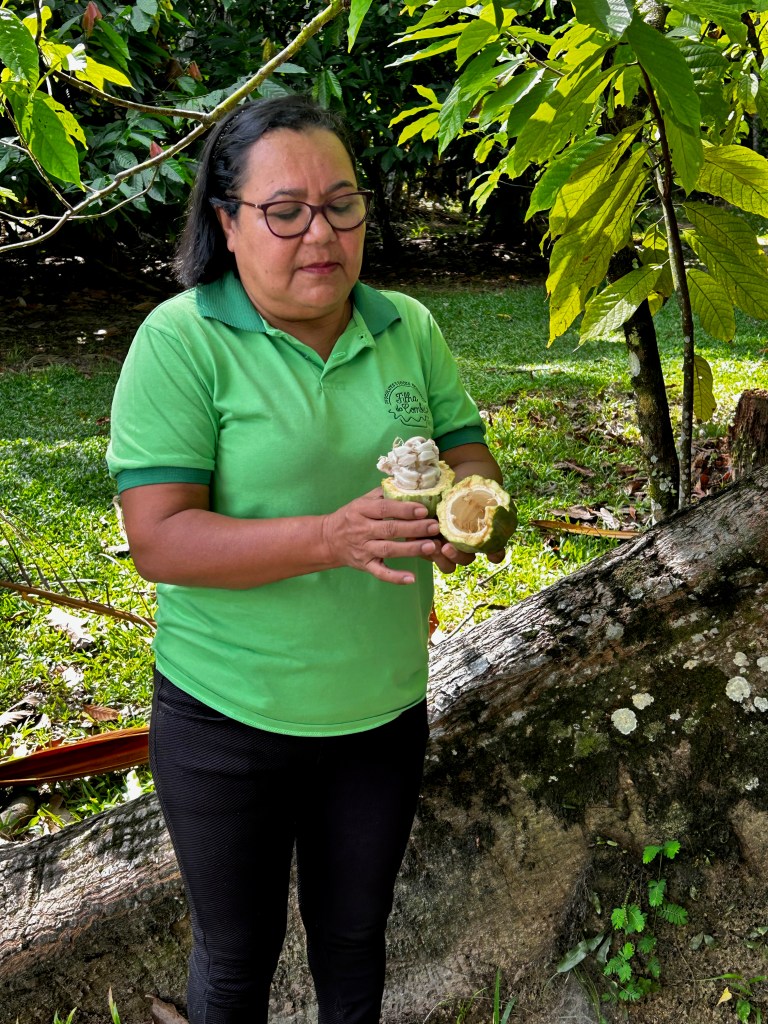
Of course not all is lost. There are plenty of people out there defying the odds, acting and thinking outside the box. In a recent trip to Belém, the capital of the Amazon state of Pará, I visited Dona Nena, founder of Filha do Combu, a small business operating within — and in harmony with —the forest biome. From grinding cacau seeds in her kitchen to sell at a street fair, Filha do Combú has defied the odds, blossoming into an artisanal chocolate factory and a tourist destination. During a business hackathon, young Pará based entrepreneurs introduced us to — doable — projects ranging from recycled glass-based concrete to potable water solutions for small Amazon communities. At another business fair, I met an entrepreneur making bricks, charcoal and other products out of wasted açai seeds.
It isn’t out of our reach to rethink market incentives and policies to increase the chances that small sustainable businesses will flourish. Small can be beautiful when it comes to employment generation, cementing communities and even innovation. And within natural biomes, small is the only scale possible. And why not? Why do we need to grow exponentially all businesses?
When it comes to large businesses, if we are to keep the planet livable, a change in incentives is also urgent. Instead of betting only on solutions that feel like industrial bulimia, such as carbon capture schemes and shooting at clouds for rain, we must shatter the rules holding back C-suite workers from following their own best instincts. Emissions and waste generation must be charged against profits. No business or person should be allowed to profit while creating a cost to others. No waste is “just a little” — landfills and the oceans are beyond capacity and it is more than urgent that we stop generating waste. Organic waste must be composted for energy generation, agricultural use or other creative endeavors like the açaí seed project I mentioned. Packaging must be returnable to the original packager, and subsidies be granted to recycling businesses. And while we are at it, aluminium can and paper collectors must be paid for their services, as opposed to shunned by society.
Profit is not the enemy, but calculating it according to reality can help bring about the solution. Industries have for long been incentivized to produce ever more, leading us to a society of waste —solid, gas and liquid! —disguised as convenience. Externalities are rarely accounted for. We created those incentives. We can change them.
 Cecilia Tornaghi